This was originally posted at Superpowers for Good.
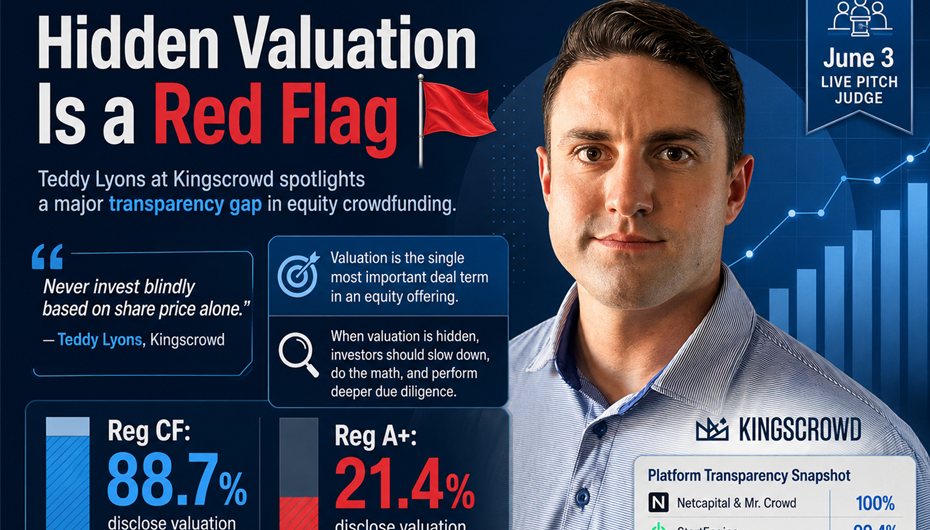
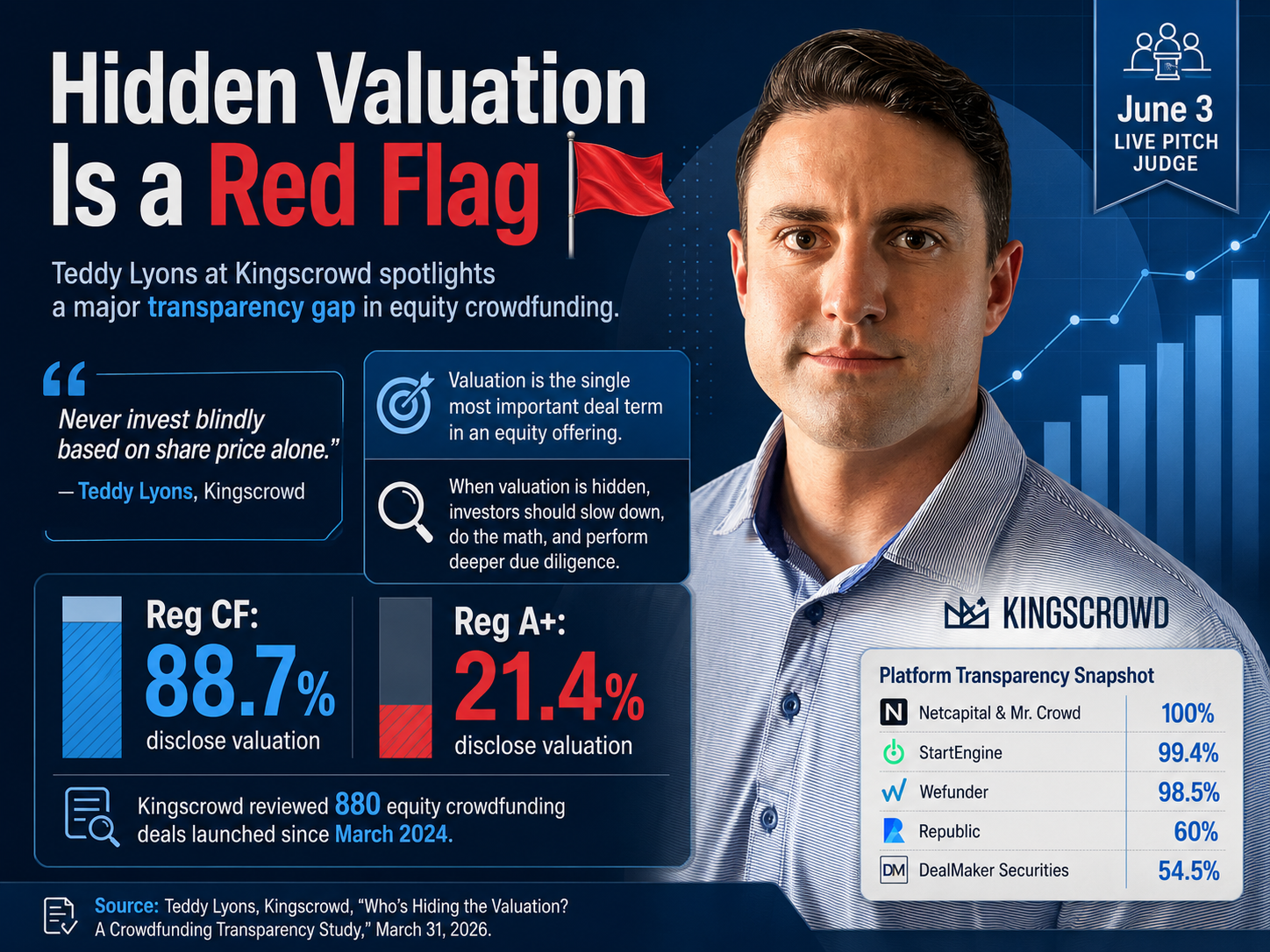
Teddy Lyons at Kingscrowd has done the investment crowdfunding community a real service with his analysis, “Who’s Hiding the Valuation? A Crowdfunding Transparency Study.” In the piece, Teddy and the Kingscrowd team reviewed 880 equity crowdfunding offerings and documented a troubling transparency gap, especially among Reg A+ offerings.
Since I read Teddy’s post when it was published weeks ago, I’ve reflected on this over and over. It is so important that I decided I need to bubble it back to the top of the conversation in the regulated investment crowdfunding community.
Teddy frames the issue well. “What is a startup actually worth?” he asks. That is the question every investor must answer before making an equity investment. Whether the security is common stock, preferred stock, a SAFE or a convertible note, valuation—or the mechanism for determining valuation—is central to the investor’s prospects for a financial return.
Other deal terms matter, sometimes a great deal. Liquidation preferences, conversion discounts, interest rates, maturity dates, voting rights, pro rata rights and information rights can all affect outcomes. Still, from a financial standpoint, nothing matters more than valuation. A great company can be a poor investment if the entry price is too high. A risky company can sometimes be attractive if the price fairly reflects the risk.
That is why Teddy’s findings deserve attention. Kingscrowd found that 88.7 percent of Reg CF companies in its sample disclosed a clear valuation, while only 21.4 percent of Reg A+ campaigns did so. Teddy describes the difference as “a massive transparency gap,” and he is right.
To be clear, a hidden or hard-to-find valuation does not automatically mean investors should avoid the offering. It does mean investors should slow down. It is a red flag—not necessarily a stop sign. The investor’s job is to find the valuation, calculate it if necessary and then judge whether the company’s revenue, growth rate, margins, market opportunity, competitive position and impact justify the price.
Teddy’s warning is especially important because many newer investors are drawn to low share prices. A $2 share price can feel inexpensive, but the share price alone tells you almost nothing. What matters is the company’s total valuation. As Teddy puts it, investors should “Never invest blindly based on share price alone.”
Teddy brings real credibility to this discussion. He is a Senior Investment Associate at Kingscrowd with a background in investment banking and venture capital, and Kingscrowd’s fund materials direct prospective investors to schedule calls with him about its funds.
We are also delighted that Teddy will serve as a judge for the June 3 Superpowers for Good Live Pitch. That is exactly the kind of investor discipline we want founders, investors and viewers to see modeled live: enthusiasm for entrepreneurship paired with clear-eyed attention to valuation, risk and return.
Kingscrowd and Teddy deserve praise for shining a light on this issue. Transparency builds trust. When issuers put valuation front and center, investors can make better decisions faster. When they do not, investors should do the math before writing the check.
Register for FREE to comment or continue reading this article. Already registered? Login here.
2